🎉 Chrome 확장 프로그램 출시! 브라우저에서 실시간 시장 가격을 확인하세요.지금 설치
Unlock professional EMA algorithmic trading for day traders. Learn how to automate strategies, enhance decision-making, and boost your daily trading edge with expert insights.
Imagine a world where your trading strategy executes perfectly, every time, without emotion or hesitation. For day traders, this isn't a fantasy but a daily reality for those leveraging professional EMA (Exponential Moving Average) algorithmic trading. If the idea of automating your trades with precision excites you, but the technical jargon feels overwhelming, you're in the right place. This guide will walk you through the fundamentals, empowering you to confidently step into the world of automated trading.
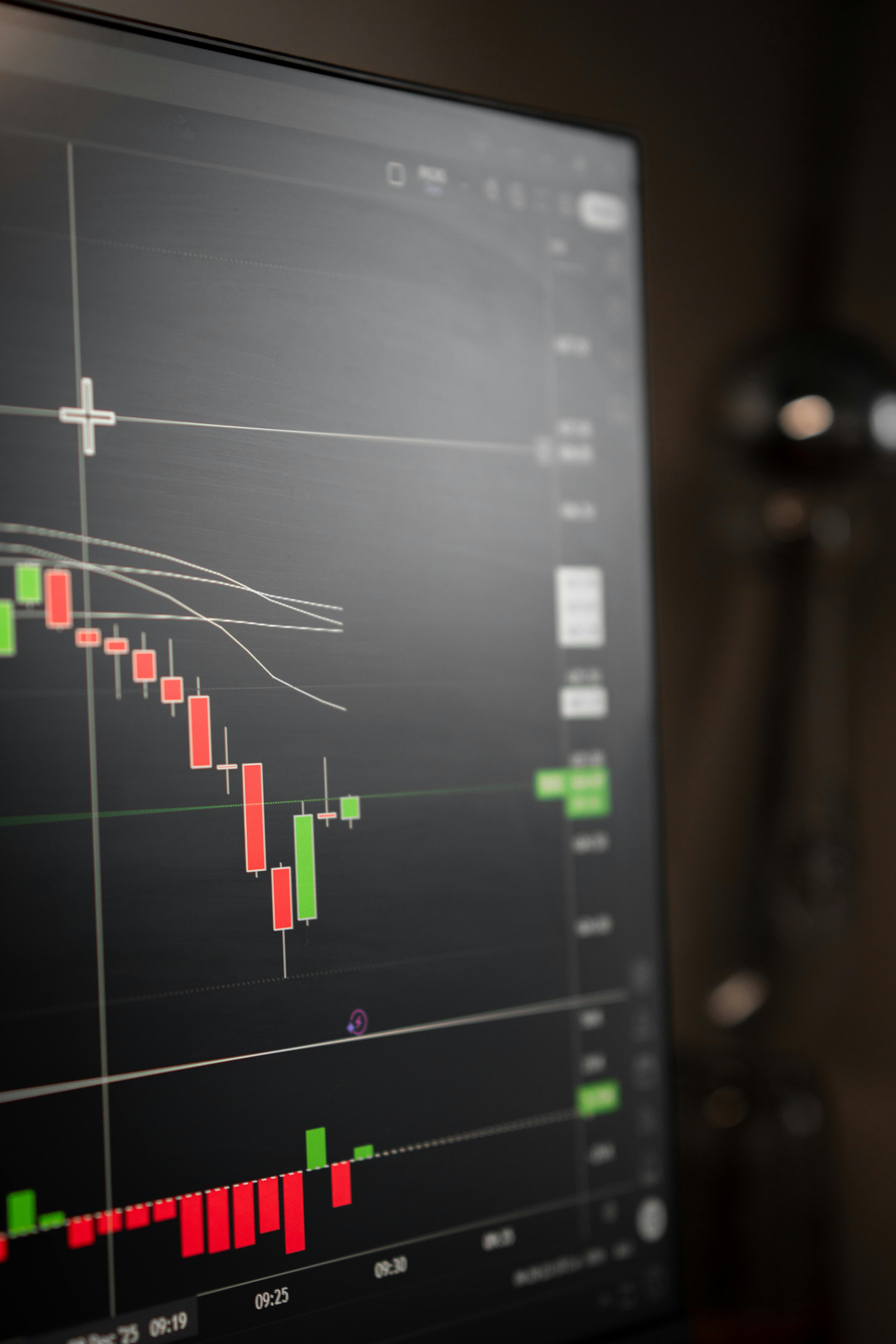
At its core, algorithmic trading uses computer programs to automate trading decisions and order execution based on predefined rules. Think of it as your personal, tireless trading assistant. When we add the Exponential Moving Average (EMA) into the mix, we're giving this assistant a powerful tool for analyzing price data. Unlike a Simple Moving Average (SMA), which gives equal weight to all data points, the EMA prioritizes recent prices, making it more responsive to fresh market movements – a crucial advantage for fast-paced day trading.
So, professional EMA algorithmic trading for day traders means setting up automated systems that use EMA signals (like crossovers or divergences) to identify entry and exit points, then execute trades with speed and accuracy. It's like having a high-speed GPS for your trades, constantly updating its route based on the latest traffic conditions.
Automating your EMA-based strategies brings several game-changing advantages to day traders:
backtestingStarting with professional EMA algorithmic trading doesn't require being a programming guru overnight. Your minimal viable first step is to define a clear, simple strategy. For example: "When the 9-period EMA crosses above the 21-period EMA, buy; when it crosses below, sell."
Next, you'll need a few basic tools:
Understanding these terms will solidify your foundation:
Exponential Moving Average (EMA): A type of moving average that gives more weight to recent prices, making it highly responsive for day trading.Algorithmic Trading: The use of computer programs to automate trading decisions and execution based on predefined rules.Backtesting: The process of simulating a trading strategy on historical market data to evaluate its performance.Latency: The time delay between a market event (like a price change) and your system's receipt of that information, critical for high-frequency strategies.API (Application Programming Interface): A software interface that allows programs to interact, enabling your trading bot to communicate with data providers and brokers.Your journey into professional algorithmic trading with EMA starts with continuous learning. Begin by familiarizing yourself with Python programming fundamentals. Then, explore how to backtest simple EMA strategies using historical data. Many resources, including our own RealMarketAPI Docs, offer guidance on integrating data feeds for your algorithms. For practical examples on building a trading bot, you might find our guide on Build an Algorithmic Trading Bot for NFLX: Examples & Strategies particularly helpful.
Experiment with different EMA periods (e.g., 9, 21, 50) and asset classes. The key is to start small, test rigorously, and gradually build complexity into your automated systems. Remember, even sophisticated algorithms start with simple rules.
Professional EMA algorithmic trading for day traders offers an incredible edge in today's fast-moving markets. By embracing automation, you can trade with unparalleled speed, discipline, and efficiency. Don't let the technical aspects intimidate you; break it down into manageable steps, leverage the right tools, and commit to learning. The financial markets are constantly evolving, and so should your trading approach. Take the leap – your automated trading future awaits!